Modern culture has accustomed us to the image of the hero as an exceptional, almost superhuman individual who builds his power upon physical strength or technological advancement. However, within the deep structures of our collective unconscious lies a much older and more fundamental image—the image of the King, who is not merely a political administrator, but a guarantor of a higher, metaphysical order. In J.R.R. Tolkien’s world, this figure is Aragorn, son of Arathorn. To fully understand the significance of his return to Minas Tirith, we must view him not only through the lens of fantasy literature, but through Carl Gustav Jung’s depth psychology, Joseph Campbell’s theory of myth, and the biblical typology of King David.
THE KING ARCHETYPE AND ITS PSYCHOLOGICAL SHADOW
According to Jungian psychology, the King archetype is the central point of the male psyche, responsible for bringing order to chaos, administering justice, and ensuring fertility—both spiritual and material.
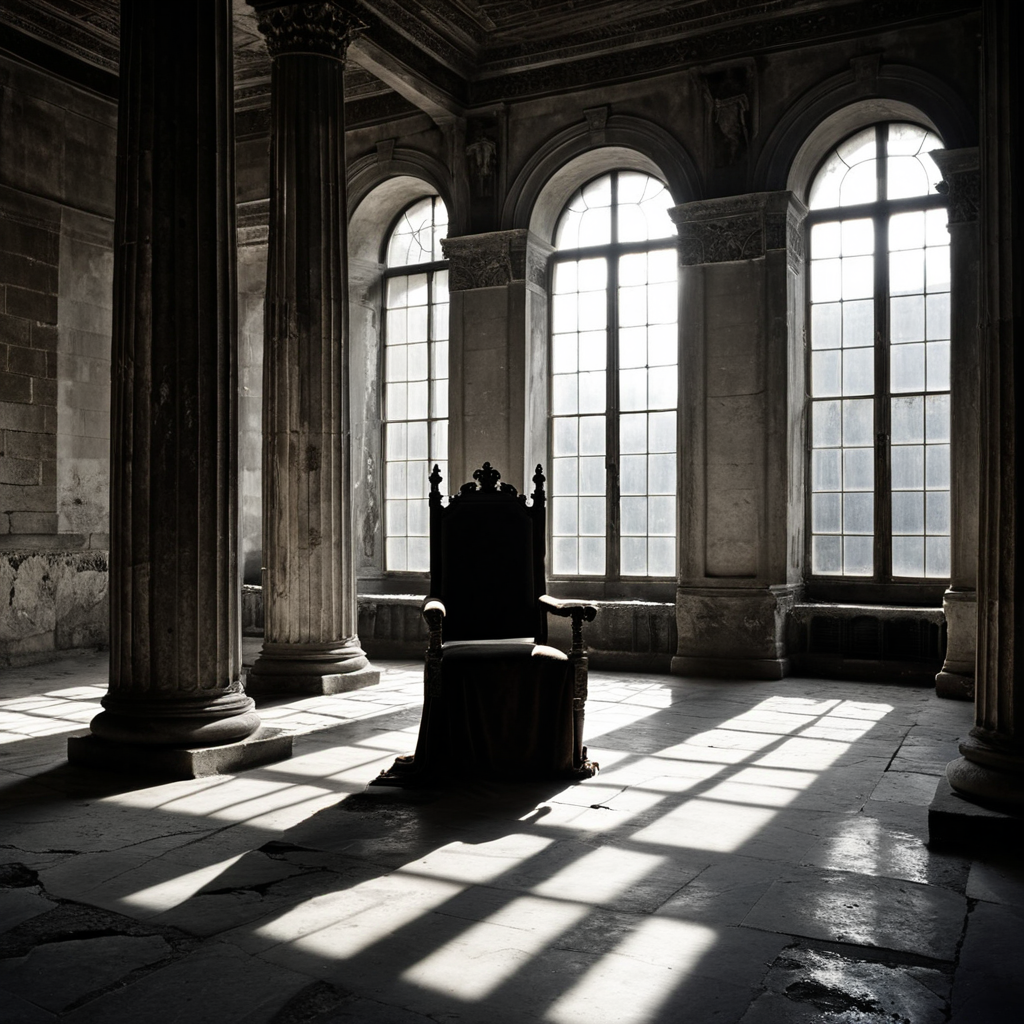
In his mature form, the King is the one who defines boundaries and ensures that the world functions in accordance with the law. Like every archetype, however, it possesses its pathological manifestations, referred to by Jung as the “Shadow”: the Tyrant and the Weakling. The Tyrant exploits the world for his own greatness, while the Weakling fails to take responsibility for the realm entrusted to him.
In Tolkien’s narrative, much like in the biblical history of Israel, the true King is juxtaposed with the figure of the Steward, who has succumbed to this very archetypal distortion. Denethor II in Gondor and King Saul in Israel serve as psychological studies of power that has lost its spiritual foundation. Both Saul and Denethor cease to perceive sovereignty as a form of service. They begin to treat the throne as their personal property rather than a sacred trust committed to them by a higher authority.
The Steward becomes an administrator of fear and a bureaucrat of control. Upon witnessing the approach of the rightful ruler, he feels no relief at the return of true order, but rather a threat to the structure he has painstakingly built as a substitute for it. Saul hated David because the young shepherd’s successes reminded him of his own lost anointing and spiritual barrenness. Denethor hated Aragorn (known to him previously by the name Thorongil) because he sensed in him a charismatic authority that can neither be bought nor manufactured through years of bureaucratic proficiency. Here, the fundamental conflict is revealed: power for power’s sake and the maintenance of the status quo versus power as a tool for restoring the common good.
KENOSIS: THE KING WHO BECOMES NO ONE
Before the King ascends the throne, he must often undergo a process that theology calls Kenosis—a voluntary self-emptying or humiliation. Joseph Campbell, in The Hero with a Thousand Faces, describes this as the stage of initiation and the “Road of Trials.” Both the biblical David and Tolkien’s Aragorn spend the prime years of their lives in the wilderness, living among outcasts, outlaws, and those pushed to the fringes of society. It is there, far from the lights of the palace, that their true legitimacy to rule is forged.
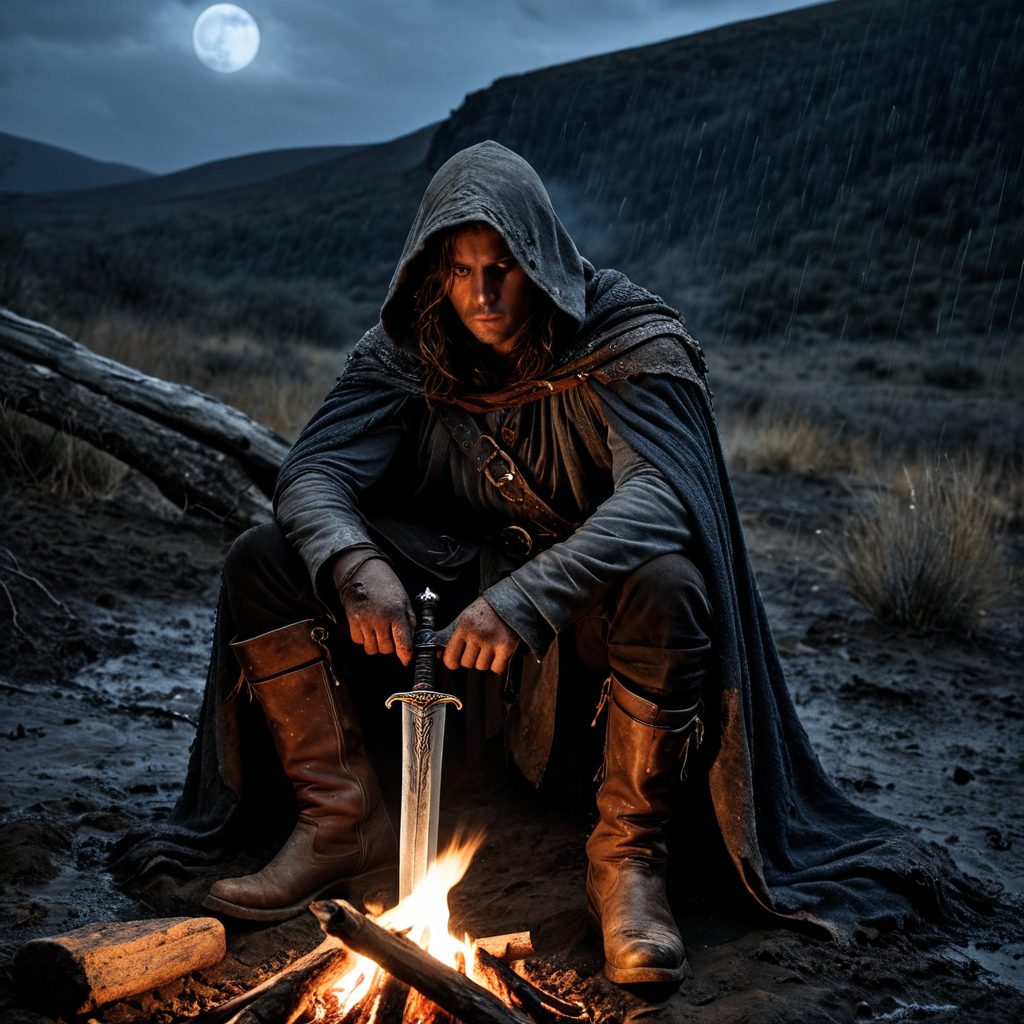
In the Cave of Adullam, David gathers around him “everyone who was in distress or in debt,” becoming a ruler without a state, tempering his character in extreme poverty and constant danger. Aragorn serves for decades as a Ranger of the North—the despised “Strider,” sleeping in the mud and protecting lands that do not even know his name, and which, if they did, would likely treat him with mistrust. This is a crucial element of royal initiation: only one who can endure being “no one” and serve without glory is worthy of becoming “everything” for his people in their hour of trial.
Their path to the throne leads through anonymous service at the courts of those they are ultimately destined to replace. Aragorn, under the name Thorongil, leads a spectacular attack on Umbar, destroying the corsair fleet and saving Gondor from ruin, after which… he simply departs into the unknown, claiming no laurels for himself. This bears a striking resemblance to David, who, after defeating Goliath and achieving numerous military victories, flees from Saul’s jealousy instead of seizing the crown by force. Both demonstrate the “humility of kings”—they understand that time and opportunity belong to a higher order, and attempting to hasten destiny would be an act of hubris that would merely level them with the Stewards.
REX SACRALIS: THE LINK BETWEEN WORLDS
In his works on comparative religion, Mircea Eliade emphasized that in archaic societies, the king was perceived as the axis mundi—the axis of the world. His presence guaranteed not only just judgments but also the prosperity of nature itself, and even the fertility of the land. In the Tolkienian tradition, which is closely linked to the Christian worldview, Aragorn embodies this supernatural connection between the ruler’s condition and the state of the kingdom.
“The hands of the king are the hands of a healer”—this sentence, spoken in the Houses of Healing after the Battle of the Pelennor Fields, is the most crucial proof of Aragorn’s identity.
The true King restores life where the system [represented by the Steward] sees only the inevitable statistics of loss. When Aragorn enters the city, he does not merely bring the military force needed to repel the enemy; he establishes shalom—the biblical peace that signifies wholeness and the healing of relationships. Eliade described this phenomenon as a return to the time of the mythical beginning (in illo tempore), when the world was pristine and free from the stain of chaos.
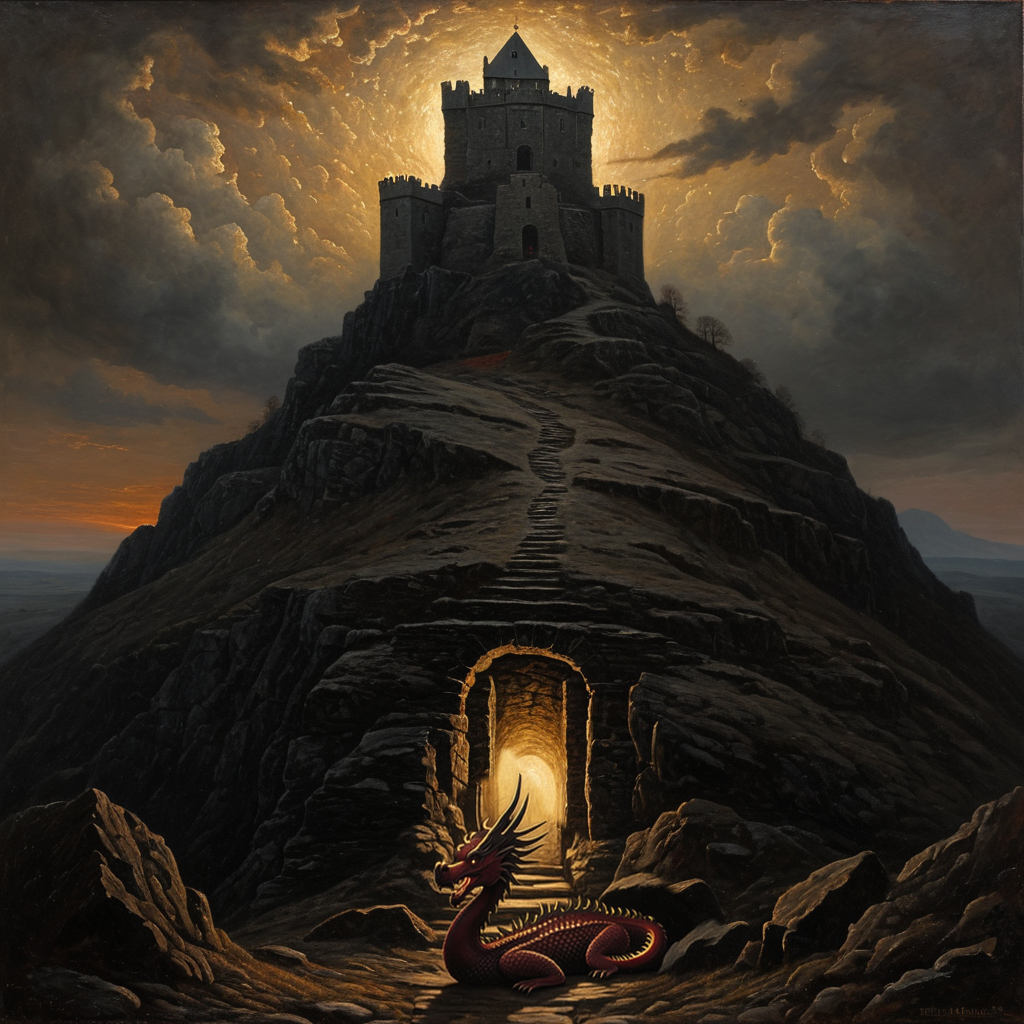
At this point, it is worth recalling a legend from my own heritage: the story of King Krak, the mythical founder of Kraków. His command to slay the dragon is not merely an attempt to rid the city of a physical threat. In universal symbolism, the dragon is the personification of chaos—a primordial, destructive force that paralyzes the life of the community. The King, as the supreme authority ordering the annihilation of the monster, performs an act of restoring cosmological order.
The image of the King ruling atop the hill [Wawel] versus the dragon sleeping in the dark cave beneath it is a perfect illustration of the reign of spirit over matter and order over destruction. Aragorn, standing against the servants of Sauron, performs the same function as the legendary Krak: he is the one who sets an impassable boundary to chaos and restores the world’s proper proportions.
THE MESSIANIC FIGURE AND CHRISTUS VICTOR
The deepest layer of Aragorn’s character is hidden in his typological resemblance to the figure of Christ. In biblical theology, David is a prefiguration of the Messiah, while Aragorn serves as a literary and cultural reflection of this ideal. He is not a simple carbon copy of Jesus, but rather an image of a ruler who embodies the ancient model of Christus Victor—Christ the Conqueror, who triumphs over the darkness.
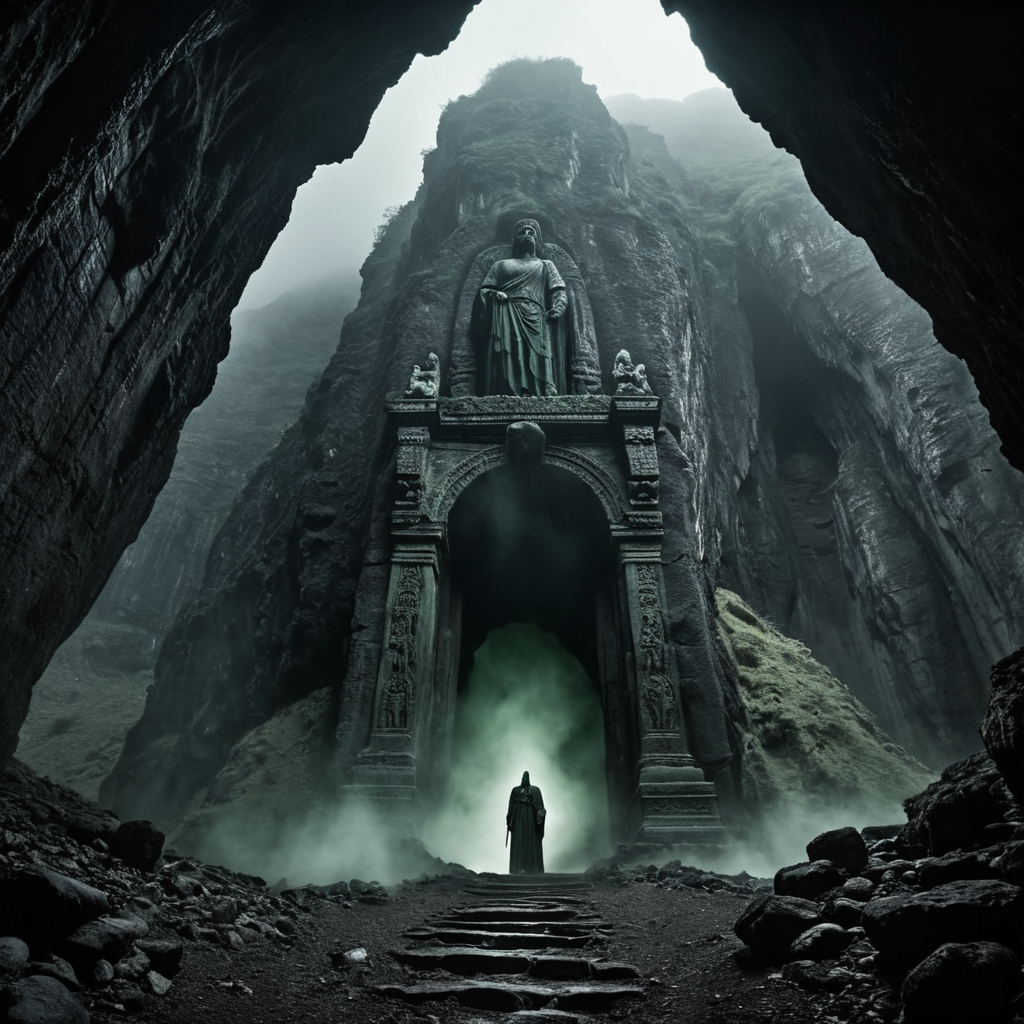
This motif is revealed most fully in the passage through the Paths of the Dead. Aragorn, as the rightful heir, descends into the underworld—the realm of those cursed for breaking their oath, who have lingered for centuries in suspension between worlds. His authority extends beyond the boundaries of life; he offers them redemption and peace in exchange for one final service. This is a literary echo of the Descensus ad Inferos [the descent into hell], where the true King liberates the prisoners of darkness and restores their dignity.
Aragorn does not rule by the strength of the naked sword alone, but by the truth of his identity, which is stronger than death. He restores the world to its proper form after a long era of “stewardship”—an interim period in which people had forgotten what it was like to live in the radiance of rightful authority. His coronation is not an act of pride or personal triumph, but a necessary completion of the cycle of nature and spirit. Just as spring must follow the harshest winter, so too after a time of concealment and humiliation [kenosis] must come the manifestation of glory that heals the wounds of the kingdom.
ORDER THAT HEALS
The figure of Aragorn, son of Arathorn, teaches us that true authority is born in the shadows, in humble service, and in arduous patience. The Steward—whether we call him Saul, Denethor, or a modern, soulless bureaucratic system—will always fear the King. He will fear him because the King, by his very presence, reminds him of his own temporality and the fact that power without a spiritual foundation is merely a form of violence.
The King Archetype, whose biblical manifestation is David and whose literary fulfillment is Aragorn, is a call to return to a model of power that does not serve itself, but acts as a channel through which order, meaning, and healing flow into the world. On a personal level, it is the foundation of mature masculinity—sovereignty over one’s own chaos and the ability to master oneself before attempting to bring order to the world.
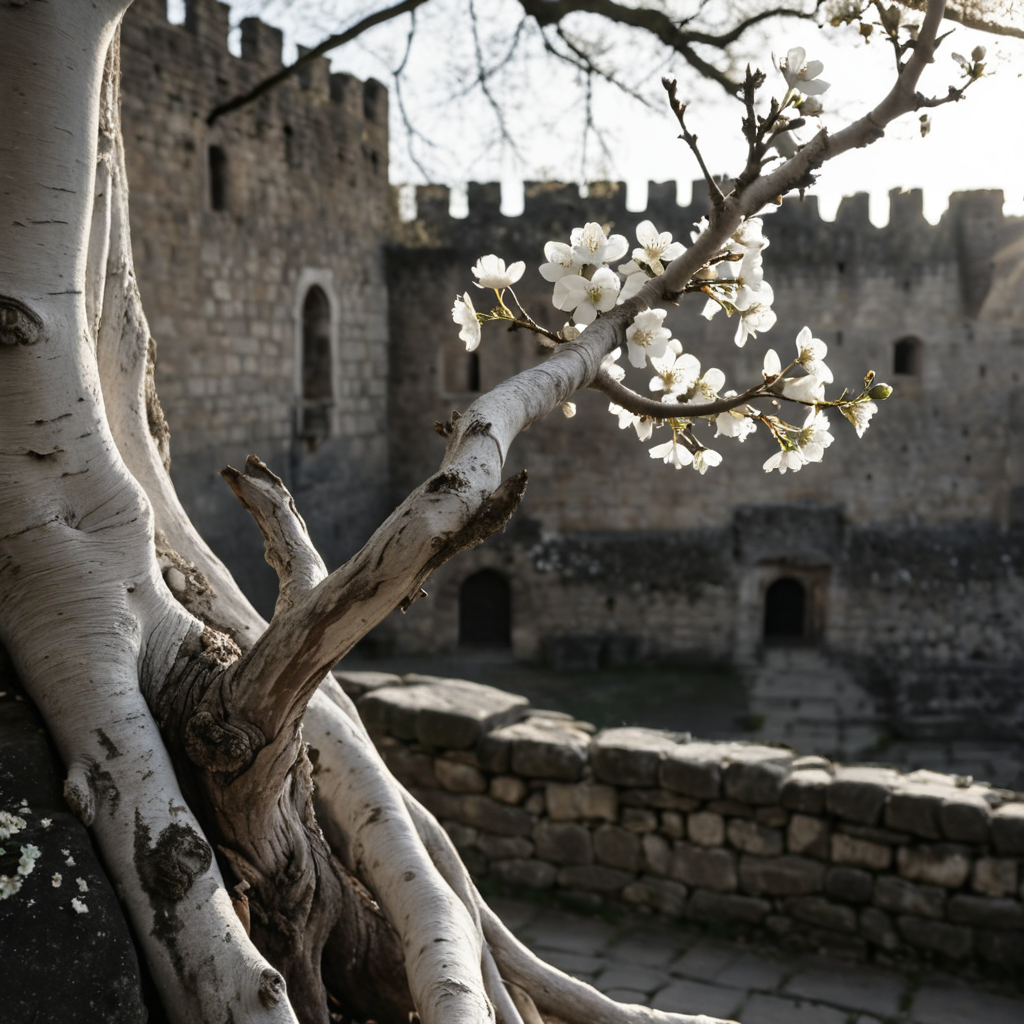
A true kingdom does not begin in golden throne rooms; it is born in the caves of fugitives and in the mud of the trails where the Rangers wander. Only one who has passed through his own desert and accepted the time of being “no one” knows how to make the White Tree bloom again.
As early as next week, a new article will appear on the blog. This time, we will return to the ITINERARIUM section (The Path of the Wanderer).
Take care, wherever you are, and see you on the trail!