The Game Master doesn’t always throw us onto the front lines. Sometimes, He allows us to return to our staging area, where the mission seems accomplished and the experience points have been handed out. And it is precisely in this apparent peace that the hardest stage begins. In these moments, in the time between adventures, my bipolar mind often simply looks for an opponent. When there is no external enemy, I start struggling with myself. Daily habits—getting out of bed, brushing my teeth, going to work, even this writing—expand to the rank of an epic opponent. Discouragement can be so thick that every movement feels like a fight for survival in a swamp. This is my private war in times of peace.Knowing that my warrior nature would most gladly go vikingr [the Old Norse term for a seafaring raid] all the time, I decided not to give in to this stagnation. I concluded that sun and movement would do me good. I chose a goal that had been on my list for a long time: the Iberian settlement of Ca n’Oliver in Cerdanyola. This place is not just a pile of stones—it is a powerful oppidum [Lat. a fortified hilltop town, serving as a political and economic center] which, for over five hundred years, from the 6th century BC, dominated the entire Vallès plain. Imagine this strategic eye: a fortified city on a hill, with walls, towers, and a moat, controlling every movement of goods and people between the coast and the interior. It was the master level of logistics in the ancient world, where the Laietani [the tribe inhabiting these lands] traded surplus grain with Greeks and Phoenicians, building their power on the solid foundations of agriculture and trade.
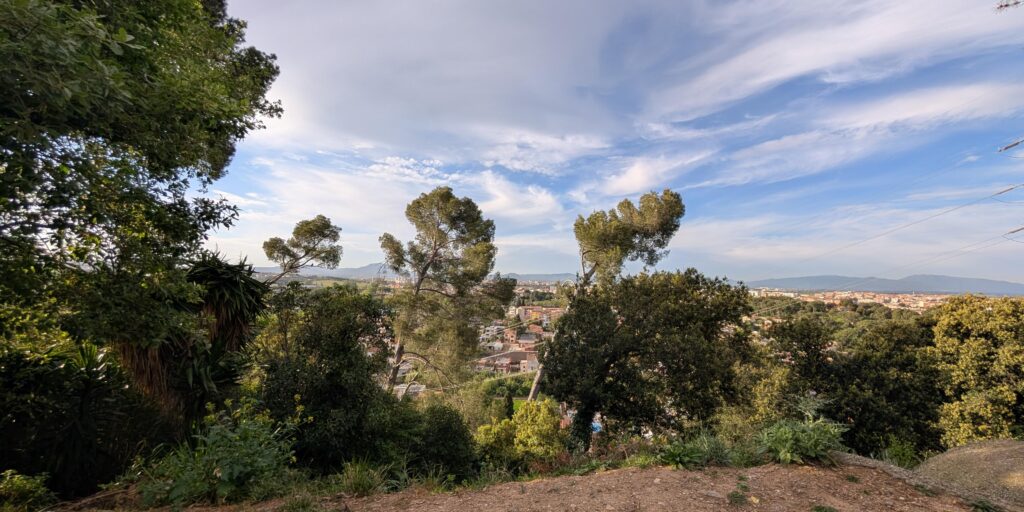
Constitution save: Success. The walk uphill allowed me to sweat out the morning lethargy and think of nothing but the present moment. Awareness of the Game Master’s Living Force helps when my own processor, commonly known as the brain, tries to kill me. Along the way, I also had a conversation with my parents—a personal “checkpoint” in a world where a true relationship is harder to come by than epic loot. Right before entering the museum, on the hill, I took a moment for myself. One last cigarette, the remains of an energy drink, and a view from the top that allows you to gain the perspective of someone standing guard over their own life.
A final look at the Vallès panorama allowed me to gain one last bit of perspective before I decided to shut the sun behind the entrance doors. It was that moment where the experience of the journey itself naturally transitioned into the next stage. Crossing the threshold, I didn’t know yet what this place would tell me—I simply entered the cool of the exhibition, which immediately caught my attention.
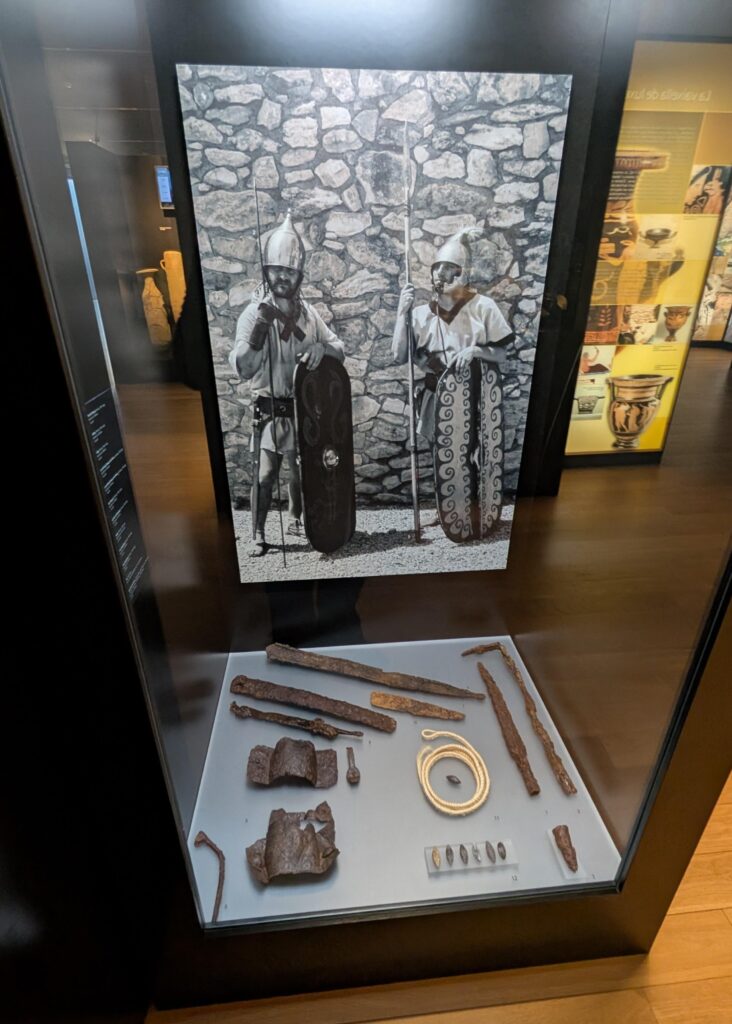
As a Public History graduate from Wrocław, I appreciate how this exhibition was prepared. It’s clear that the creators did their homework in crafting a modern and thoughtful exposition. Additionally, you could scan a QR code at the entrance to follow the narration in English—a brilliant solution for someone who, for various reasons, wants to dive into the details in that language. However, here the Game Master threw a debuff my way: my phone battery was dying, gasping on its last few percent. Cut off from the digital guide, I had to rely on what I saw, what I knew, and what I was simply able to understand by some miracle—which, in the end, is exactly how I like it best.
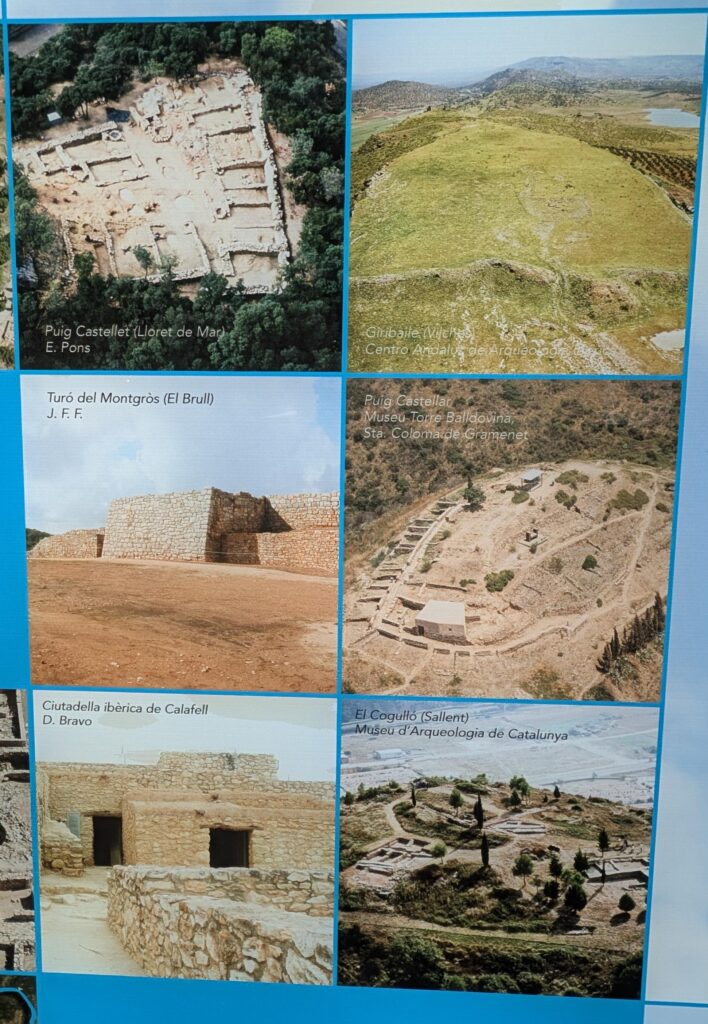
For me, engaging with this type of exhibition is more of a pretext for reflection and drawing conclusions than for gathering facts, though that still happens incidentally along the way.
It was there, wandering among the exhibits, that understanding dawned on me. I realized that what kept these people upright during long periods of peace was not just discipline, but a deep, organic sense of the work they performed. Today, as “slaves of the system,” we often carve in a digital void for ghost corporations and bosses whose faces we don’t even know. Our effort is anonymous, and the fruits of our labor dissolve into Excel spreadsheets. With the Laietani, it was different. When the potter shaped those stout vessels, when the blacksmith forged another tool, and the woman painstakingly wove flax on a household loom—they knew exactly who they were doing it for. Even if a large part of this production was destined for trade with Greeks or Phoenicians, the profit from this exchange didn’t end up in the pocket of an anonymous shareholder on the other side of the world, but tangibly built the security of the community.
Such an awareness of being truly needed is a powerful modifier to Will saves. When my mind enters those heaviest stages, where the struggle to maintain balance feels like a suicide mission, it is precisely the feeling of being a useless gear in an anonymous machine that saps my strength the most. The Iberians had this mechanism reversed. Their toil was rooted in a specific goal and specific people, which gave them an additional bonus to saving throws against discouragement.
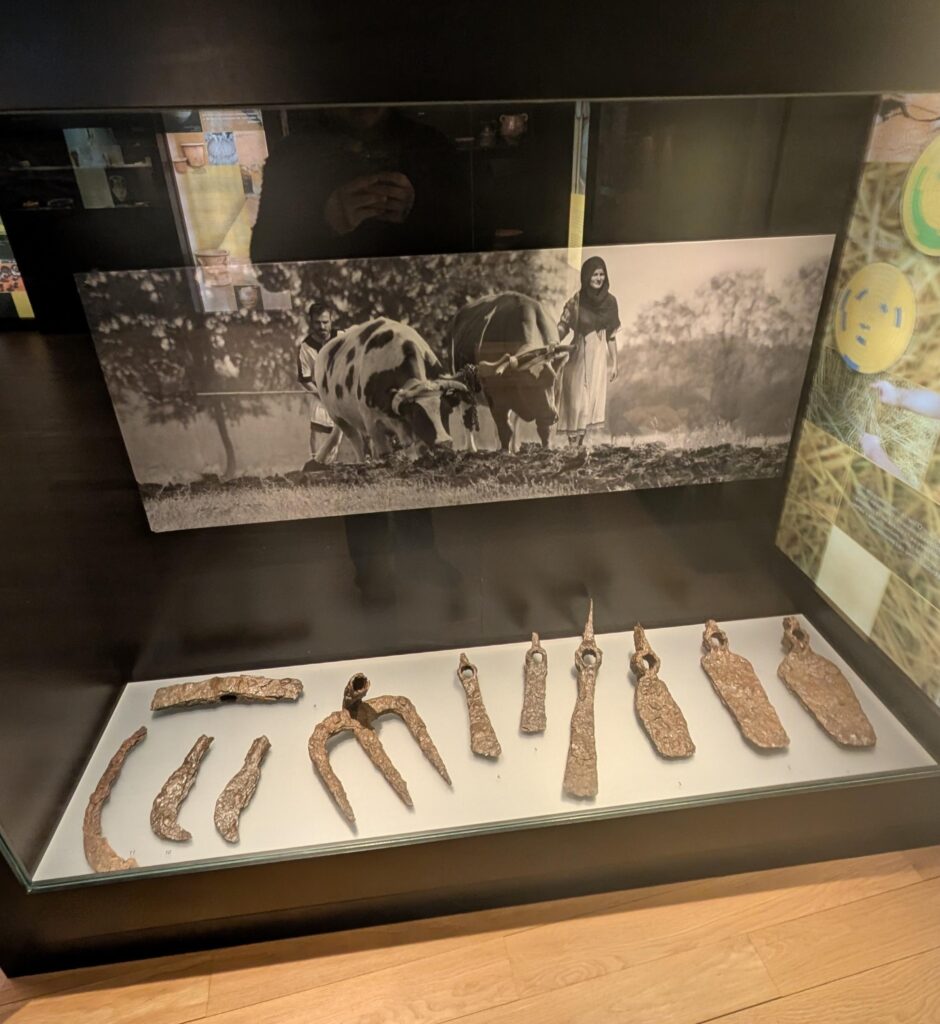
This communal sense did not remove the burden of life, but it made it bearable, because it gave a reason to simply take up the task each morning—to push the plow, turn the potter’s wheel, or sit at the loom. For them, it wasn’t just drudgery; it was a cure for lethargy and a foundation supporting mental health, ensuring that no one had to face the darkness alone.
They did it together, sharing houses where three generations could live under one roof, passing down knowledge and supporting each other when Fate threw crop failures or disease at them. This work for the community was their foundation. It gave them the sense that even when nothing “epic” was happening, what they were doing protected their tribe from falling apart. It was their remedy for existential emptiness. Every shaped vessel, every basket of grain thrown into the common silo was a brick added to the wall of survival for “their own.” It wasn’t “going to work” just to have something to eat—it was keeping the fire burning inside their own oppidum [an ancient fortified hilltop town]. In such a setup, sterile discouragement is harder to find.
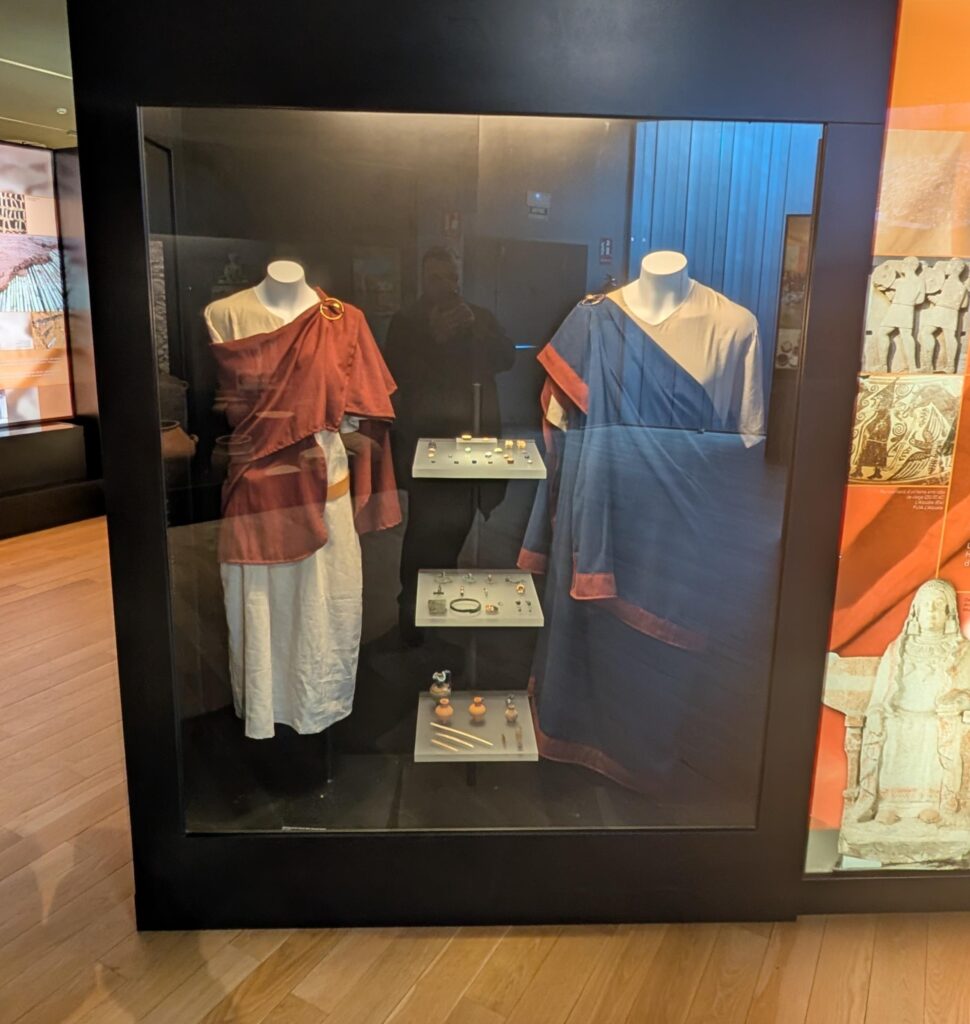
It struck me that although my warrior nature would most gladly see them only as Scutati [heavy line infantry, whose name comes from scutum—a large shield], hunting and fighting constituted only a very tiny fraction of their lives. Despite this, they didn’t have to look for an opponent by force, because their lives were filled with a common purpose. They were gears in a machine they loved and understood.
This is probably why I instinctively called my parents on the way. After all, family is the fundamental social unit—my closest tribe. Even the strongest warrior needs a point of reference so as not to go crazy when the sword must remain in the armory and the only battle is another “Fruit Thursday.” In a world broken into atoms, where corporate noise tries to drown out true needs, family remains the last bastion—that first, fundamental party worth building anything for. It was in the conversation with my parents that I sought that Iberian sense of belonging. Because every adventurer, when returning from an expedition into times of peace, needs to know that his work and effort have the face of someone close, and not just a serial number in the system. And since I don’t have a wife or even a girlfriend for now, I’m glad that I can always call my mom and dad, to whom I owe so much.
As early as next week, a new article will appear on the blog. This time, we will return to the TEMPUS section (The Path of the Time).