
INTRODUCTION: THE ILLUSION OF ABSOLUTE CERTAINTY
“I know that I know nothing.” This famous paradox, attributed to Socrates, though repeated to the point of exhaustion today, conceals the most difficult lesson every researcher must learn. Unfortunately, we forget it all too often. We live in an era that obsessively demands iron-clad facts and categorical answers, leading us to develop a pernicious need to live in a permanent illusion of certainty. Therefore, the greatest error of a researcher is not a lack of knowledge, but the arrogance stemming from the belief that the fragments which have survived the test of time constitute a complete picture of reality. It seems to us that we know—but in reality, we only know what we think we know. Even in the exact and natural sciences, which rely on hard data, our knowledge is constantly updated.
Paradigms shift under the weight of new discoveries, and what we consider an iron-clad certainty today may turn out to be a mere shadow of the true world in the future. If certainty is so fleeting in the world of biology or physics, then what is truth based on in the historical sciences?
A CONSTRUCT OF OTHERS THOUGHTS, OR AN OPINION OF AN OPINION
In stepping into the past, we do not examine reality itself, but merely its processed echoes. Our historical knowledge is, for the most part, a construct—an opinion formed based on someone else’s opinion of a preserved source. The source itself—especially a written text—is rarely an objective record of facts, often serving as a tool for the political or moral propaganda of its time. These sources are, after all, inextricably linked to the era in which they were created; they were born within specific historical and mental realities to which we, as people of the 21st century, have only limited access. Many ancient concepts, cultural codes, and symbols have been irretrievably lost. Their original meaning is sometimes entirely impossible for modern people to decipher or correctly interpret, which is why our contemporary interpretation is almost always vulnerable to the error of anachronism—the attempt to judge past centuries through the prism of our current values.
In this context, even seemingly inviolable frameworks, such as dates, cannot always be accepted as absolute dogma. Changes in calendar systems, scribal errors, or deliberate manipulations in chronicles mean that we can often only state with varying degrees of probability that an event took place at a specific point on the timeline. History rarely grants us the luxury of absolute certainty; it is, rather, a constant balancing act on the edge of probability.
THE ILLUSION OF OBJECTIVITY, OR NETS CAST INTO THE DARKNESS
In what has now become a classic reflection on the researcher’s craft, giants of historiography such as Marc Bloch and Edward Hallett Carr ruthlessly exposed the illusion of our objectivity. Bloch, in his The Historian’s Craft, rightly noted that documents and sources are silent in themselves—they only begin to speak to us when the historian asks them the right question. It is the researcher who, through their doubts, rouses them from their lethargy. Carr, in his famous lectures What is History?, employed a brilliant metaphor: he compared historical facts to fish swimming in the vast, dark ocean of the past. What ultimately lands on the table depends entirely on which part of the ocean the researcher chooses to cast their net and what equipment they use. Thus, it is we who, by posing specific questions and choosing our own, always subjective perspective, pre-shape the very answers we extract from the shadows of time.
ANATOMY OF A MYTH: THE CASE OF THE GŁOGÓW HOSTAGES
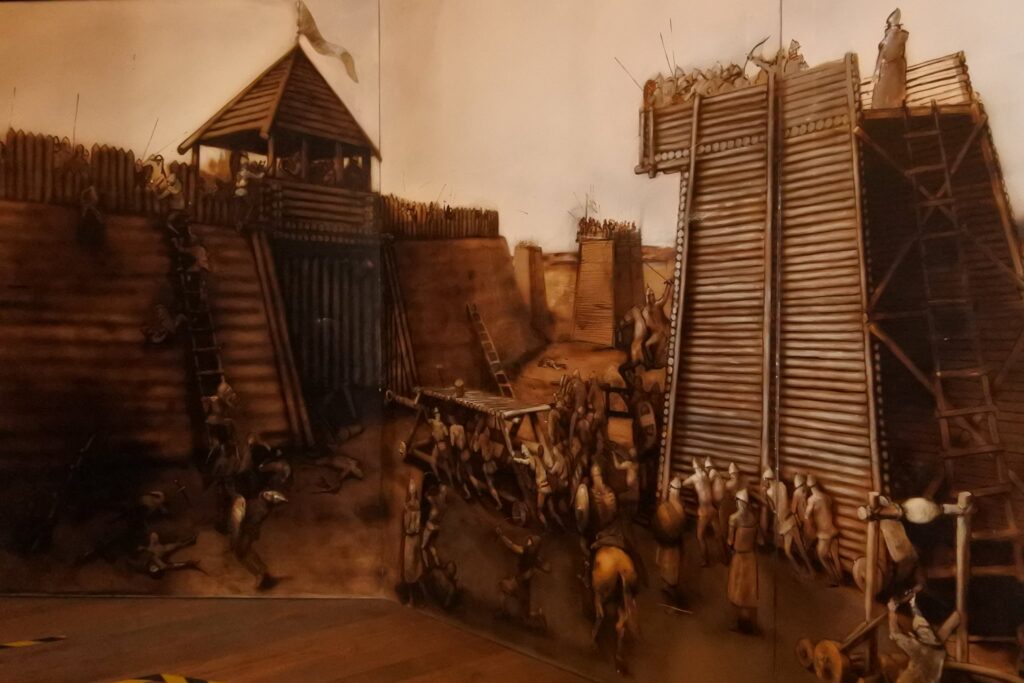
A perfect example of how subjective interpretations shape our “truth” is the mechanism by which history transforms into a national myth. In the analysis of the events from the defense of Głogów in 1109, this phenomenon is visible with extraordinary clarity.
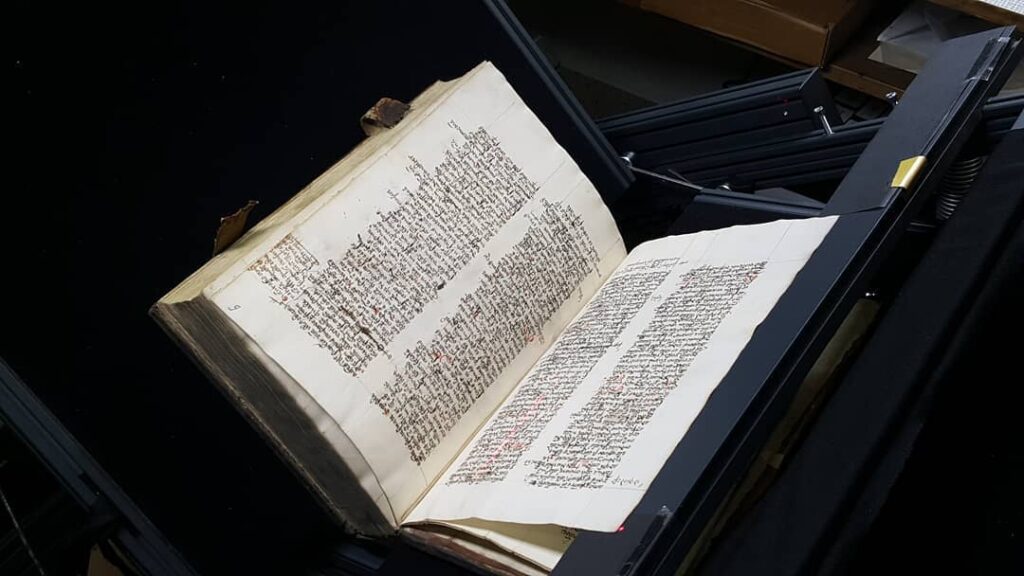
Gallus Anonymus, in describing the siege, mentions hostages, using Latin terms meaning the sons of the more prominent burghers. From his account emerges a picture of a brutal, yet fundamentally typical war for the realities of the time, in which Henry V breaks his word regarding the safe return of the captives to their homes. However, Master Wincenty Kadłubek, writing decades later, radically changes this narrative by introducing the word parvulus—meaning strictly a small child. This single semantic maneuver completely modifies the perception of the entire situation.
Did it serve solely to strengthen a moralizing message, teaching that in the name of the eternal freedom of the fatherland and higher values, it is worth sacrificing even the life of an innocent, minor being? This is highly probable, but is it certain? It is equally possible that the story of the siege, passed down from generation to generation, became blurred in oral tradition, fluidly transforming adolescent hostages into defenseless children, and Kadłubek was writing this version, believing that this was indeed the true course of events.
Regardless of the original intentions—whether it was a deliberate ideological maneuver or merely the effect of distorted generational memory—the mechanism remains the same. Thus, the opinion of one author, superimposed on the account of another, created the foundation for a powerful national myth that functions in public space and social consciousness to this day.
ACCEPTING THE SILENCE AND BOWING BEFORE THE FACTS
In the face of such malleable matter, the historian’s task is not the audacious proclamation of the discovery of “objective truth.” The true work of a researcher is a patient journey through a dense labyrinth of opinions, theories, and narratives. We enter this thicket to first present these opinions rigorously and critically, to weigh them against one another, and only then—perhaps—to propose our own interpretation.
Such a stance requires the researcher to set aside their own ego. Humility is, above all, the acknowledgment of the silence of the sources: the awareness that history often remains silent precisely where we most desire a clear answer. This silence should not breed frustration. A true researcher on the Path of Time reconciles themselves with what they find. They accept what they cannot change and do not attempt to forcibly fill the lacunae with their own contemporary conjectures. It often requires bowing before the facts, even then—perhaps especially then—when they mercilessly shatter the beautiful, heroic narrative to which we have grown attached.
THE WANDERER’S BUTDEN OF RESPONSIBILITY
Abandoning the safe haven of our own imaginations and deceptive myths, however, comes at a price. Every scholar is, in essence, an exile. Our cognitive mission rarely ends in the seclusion of archives and sterile libraries. It is a constant journey through the physical world, which makes us aware of our place in an ever-expanding universe. The one who wanders quickly learns humility. For the wanderer knows that at the end of every historical analysis, there are no dry dates or yellowed parchments. There are people.
The historian’s burden of responsibility lies in the fact that as we traverse today’s world, we describe once-living individuals—their dramas, their inner conflicts, and their blood. They, just like us today, deserve absolute respect. And the highest form of that respect is to refrain from putting words in their mouths they never spoke, and deeds they never committed, just to satisfy our own illusory need for absolute certainty.
A new article will be published next week. This time, we will be launching the SACRUM (Path of the Spirit) section.
Take care, wherever you are, and see you on the trail!